Monday, November 17, 2014

Guided Reading

My article: http://www.jstor.org/stable/747803?seq=3

This article starts with talking about practice and how it is the best way to increase reading fluency.  By giving the opportunity to students to practice their reading they are going to learn and continue to grow in their reading.  It those goes into guided reading practices.  It says that this practice is one of the most common ways that reading is taught in the classroom.  It involves having students take turns reading passages or sentences aloud and having the teacher their to guide the reading and help if needed.  The oral aspect of this reading is very helpful not only to the child reading but the children that are also observing them read.  Although this is helpful for average and higher level readers it is often hard for low level readers.  Since they are going to read in a slow or inaccurate matter there isn't much time in this type of lesson to help them with their reading.   Because of their slow nature they are more likely to read less words which in the long run allows them to have less practice.

A way that teachers can supplement that is by giving weekly assigned readings.  That way a student has to perfect that specific reading in order to move onto the next reading.  This is better than the alternative of having the child read a different passage every day and not being able to master them.  This also helps them master specific decoding skills that they need to read texts more fluently and to be able to comprehend the texts that they read.  There are some studies that show  that although this is a method that can be done it doesn't always work on every reader or with every story.  Although it is beneficial to read things repeatedly it may not help the reader unless there are similar words in the next reading.  That being said though if the books have sight words in them then it would be helpful because rereading those and getting to know them will be beneficial to them.

I think that students can learn a lot from listening to one another and by having the teacher there to help guide them through the reading.  I think that having a reading table can really help your classroom with guided reading because you can take those that are reading the same book and bring them to you to be able to do read aloud. By having a smaller group it allows those who aren't reading as well to not be embarrassed by a large number of people.  This can also help figure out who those lower readers are because sometimes they get lost in a large group and this can help you give them the more specialized attention that they need.  
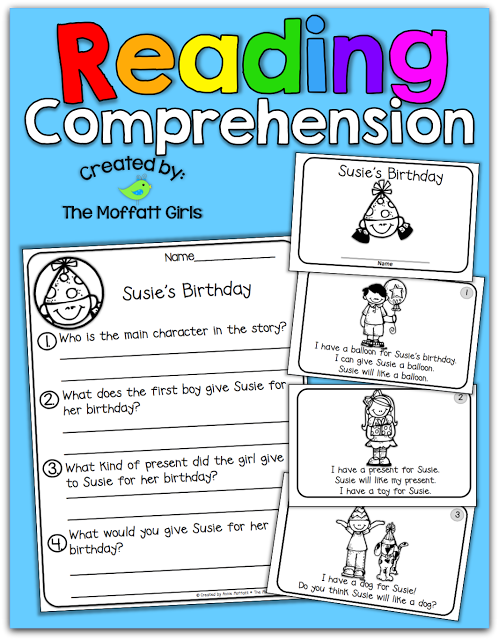
This is a worksheet that I have used in the classroom to help with Guided Reading.  

This is a book that I have and it gives great advice and such about how to incorporate guided reading in the classroom.

Questions:
1) Did your teachers ever incorporate Guided Reading in the classroom? If so how did they do it?

2) Do you think that Repeated Reading is helpful or detrimental to students that are struggling with reading?

Monday, November 10, 2014

Vocabulary

Even though the world is becoming more visual based and less communication face to face based it is still super important to be able to communicate and understand what people are saying. There is a growing need to improve students vocabulary.  More and more students are struggling with vocabulary and the level that they need to be at is something that many of them find unachievable. Even if they are able to understand certain words or vocabulary there are different levels of knowing it.  Also every student is different so some may know more than others.  One of the hardest aspects of teaching is trying to teach many students that are all on different levels.

Vocabulary is something that we all know is very important and also somewhat antiquated.  For something that is so important you would think that we would have evolved a more modern to teach it to children.  In the Dalton article they talk about using eVoc which is technology based system that allows teachers to develop vocabulary for students.  It is important to include technology in the classroom because it is something that is in most every aspect of life nowadays.  The article offers many different ways to incorporate technology into vocabulary lessons.  With these several of these lessons, computers for every student is not required, which we know is something that rarely happens in a classroom.  These strategies also include several aspects such as including ways to connect to all types of learners.  One of the activities is a word cloud.  It includes words that go along with the vocabulary word and you are able to determine how the words go with the main word. It is important to not just do the same old vocabulary lessons.  By including different activities the students will be able to remember the words better and enjoy learning vocabulary.

Example of a Word Cloud:
As teachers the students are going to model what we do.  It is important to know that and remember that.  If we use their vocabulary words then it will help them remember them and use them.  One example the Lane article gave was during morning meeting.  My using vocab words to describe the weather they will also use them.  By using words like "rather brisk" or partly cloudy rather than words like clouds or cold they can expand their vocabulary by repetition and seeing you use them to describe the weather.  


Questions:

Do you think that incorporating technology in vocabulary lessons is important for this generation of students?

How do yo think that technology can be sued in the classroom?

Sunday, November 2, 2014

Vocabulary

This is something that is very important to the development of a child and it also helps their comprehension.  Not only does it help their development but they will need vocabulary to be successful in life and to be a vital part in society. By learning vocabulary they will become better learners.  They can learn these vocabulary words in school and in their daily lives.  The more they interact the more they will know and be able to understand.


I think that the most important thing to do to build a child's vocabulary is by allowing them to be exposed to a wide variety of vocabulary.  The more they are exposed to the better.  School will become easier and so will reading if they know a lot and are constantly reminded of it.  Repetition is the key to success and learning. I think that the traditional ways that we teach vocabulary is also important because it is repetitive and allows them to hear it over and over so they know what it is.  This diagram below is something that I used in a classroom and this allowed them to be able to know what the word means, how to use it and how to visualize it.  By the end of the exercise they really know what it is and how it is beneficial to to know these words.
By knowing vocabulary it can also help their confidence in speaking.  The more they are able to recognize and know they more they are going to be involved in learning and conversations.  Boosting their confidence is super important because it will allow them to be able to be active learners and want to learn more about it.  


Questions

1. What are some other ways that you have seen vocabulary taught in the classroom?

2. Why do you think about the importance of vocabulary?

Sunday, October 19, 2014

Comprehension....

Comprehension

    So far with everything we have talked about in class if a child can understand all of those things then we can piece them together and comprehension can begin to start.  Not only do those things affect a child's ability to be able to comprehend something but their world around them can affect it as well.   It is important to know where a child comes from and their environment at home because that can really affect how much the comprehend and how quick they do.

Another thing that really affects a child's comprehension ability is what the teacher does in order to help a child comprehend.  Like the article states some important steps to building comprehension are: teaching decoding skills, building fluency, teaching vocabulary, actively pursuing prior knowledge, engaging the students to have personal responses with the text and most importantly motivating the students.  

I think one of the most important aspects of comprehension is engaging them with personal responses.  By allowing them to connect to the text they are able to comprehend it and interpret it into their lives.  The more you invite them to compare readings to themselves the more they are going to want to read because it make sit more related to them.   By relating it to them they will also see themselves as readers and become more confident in their ability.   
Questions:

1. How would you engage them in making those personal connections?

2.  Do you think that it is important to have them make those personal connections and responses.

Monday, October 13, 2014

Word Study

       I completely agree with the article that knowledge of words is very much related to comprehension.  If you didn't know the words that you were reading then it would be nearly impossible to comprehend what was on the page.  It is also vital to your overall abilities in school and life.  I also agree that it should not be restricted to one time.  You should be learning it throughout the day and it should be incorporated with every subject that is taught. By allowing them to hear these words they can find out so much more about a word.  They can tell the connotation behind it and how it is used in everyday life.  That is sometimes more influential than just reading it in a book because you may not get those cues. Like the article states a child doesn't need to know every word perfectly but having a basic knowledge of some words and knowing others that are more important very well can really help a child early on in the educational system.  Another thing that can help a study is knowing prefixes and suffixes so they can breakdown and decode a word rather than trying to look at it all at once.

Some ways to help a child remember words can be by acting it out or asking them where they might see this word.  The child will be able to remember it more easily because the action will stick out in their mind.  We did this in a classroom that I was in and the children were really involved and loved being able to be active in class while learning.  


Questions
1. What are some other ways that you have seen Word Study Practiced in the Classroom

2. Do you think the generic word study notebooks are enough to help a student learn or do you think that they are just busy work?


Monday, October 6, 2014

10/6/14 Instructional Activities- Shared Reading 
http://www.readingrockets.org/strategies/shared_reading

Definition:

  • Teachers reading: Nursery Rhymes, Giving voices to characters, Thinking aloud while reading, crafts to follow-up reading, Predictable texts and talking about the text after the reading 
  • Shared reading is an instructional approach in which the teacher explicitly models the strategies and skills of proficient readers 

Demonstration of Shared Reading:

Fluency: Accuracy and Speed

The first article was about one minute fluency test.  I know that from experience this can be daunting tests.  You are given a passage that you have never seen before and are expected to read it aloud to your teacher and while you do she sits and write on her clipboard.
That was probably the most stressful part about it because you have no clue what she is writing so it only makes you more nervous than you were before.  She is also timing you to see how quickly you read the passage which is also something that can make you nervous.  So you just read the story as fast as you can and don't really comprehend anything that you are reading.  At the end sometimes the teacher asks you questions on the basic theme or summary of the text and students sometimes as a hard time remembering what they were because they were reading so quickly.  I think that instead of timing students you just should allow them to read and see what they know.  I also think that a teacher shouldn't scribble while you are reading and should remember what the student messed up.  By having the teacher engage with you while you are reading the passage may make it less nerve wrecking and anxious.  I think another thing to help students is by making a chart so they are able to see how much they are improving because that could help with the confidence of the reader too.
The second article talked about ways to judge fluency and how to create a more fluent reader.  They also stated just because you are a fast reader does not mean that you are a fluent reader.  It is so much more than how fast you can read.  It is about how you read, the smoothness of your reading and the pace at which you read.  If you can be fluent in your reading you are more likely to comprehend what you are reading rather than just worrying about the words on the page.  If you know the words and signals you are able to think about their meanings.  This is something that is a building block for later learning and it is not learned over night.  


Questions:
1) What are other ways besides one minute fluency tests that can test a child's fluency?

2) Do you think that fluency and comprehension go hand in hand?